
bedtime / A practical guide
A bedtime handoff another caregiver can use
Share the order, familiar materials and last useful observation with the adult helping at bedtime.
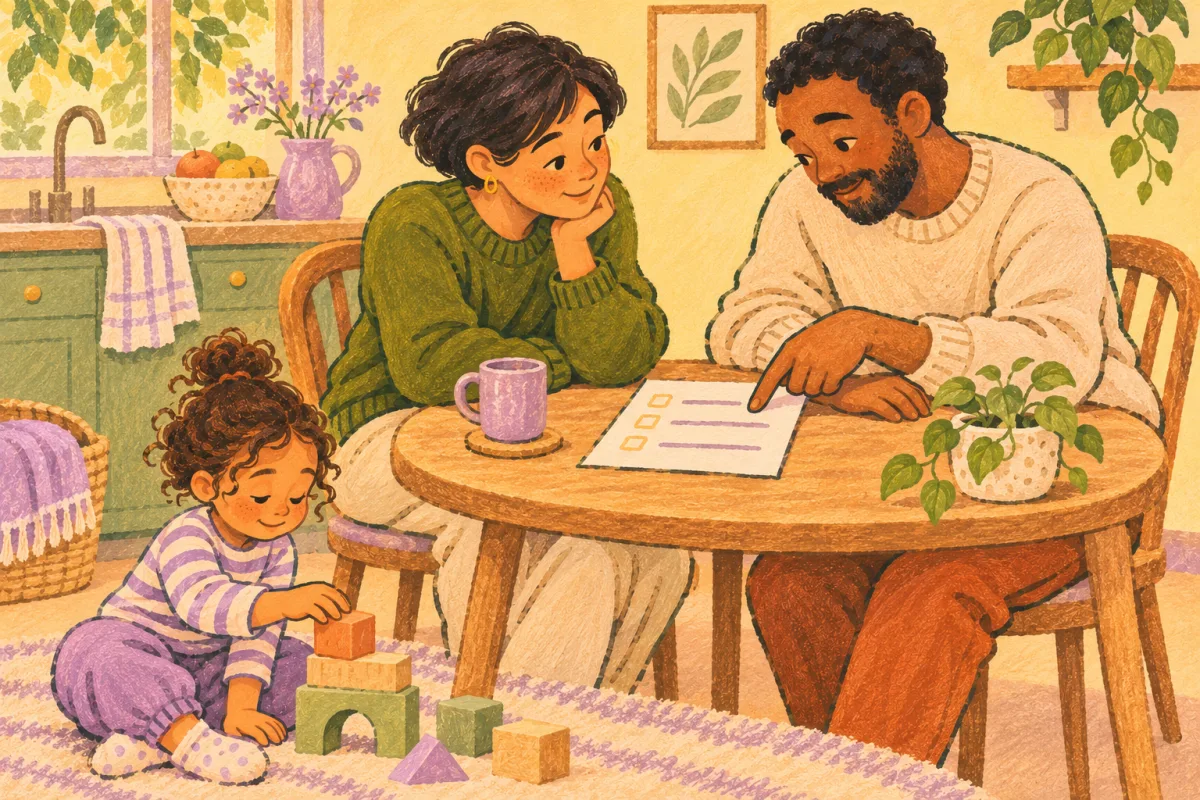
A place to start
Hand over the next practical steps before bedtime starts. Include the familiar ending and a short observation from last time, while leaving room for the next caregiver’s judgment and the child’s needs.
Make the handoff short enough to read
Start with what the other adult needs to do next. A useful handoff might name where the book is, which quiet activity comes first and how you usually describe goodnight. It does not need an exhaustive history of the evening.
Invite the other adult to point out what does not fit. They may have a different amount of time, different access to materials or another child to care for. A plan is more useful when those constraints are visible before the moment.
Use the shared plan as a reference
The caregiver link opens one specific routine plan and its check-in. It is private, expires after seven days and can be revoked by the person who created it. Send it directly to the caregiver instead of posting it in a public group.
The product counts one household rather than counting each caregiver as a new family. Opening a link and trying the plan are separate events. The second caregiver can report actual use after bedtime has really happened.
Review without grading each other
Compare observations such as “the book was ready” or “we changed the order because the bath was late.” Describe the adjustment, not which adult did bedtime correctly. Matching every word is not the goal of a shared routine.
If the family uses bedtime on several evenings, look at distinct days of use. Exploring a second routine is optional. One routine that your household returns to can be enough to make the plan useful. Persistent concerns about sleep or distress need support beyond a web checklist.
Sources and limits
For broader pediatric guidance, read American Academy of Pediatrics: Toddler Bedtime Trouble. The household examples and planning exercises on this page are our editorial suggestions; they have not been independently clinician-reviewed or tested as treatment.
CalmerTurn is an early educational product. We do not claim clinical outcomes, expert endorsement or results from families who have not used it. For persistent concerns, unusual distress, sleep or developmental worries, talk with your child’s clinician. How we write and measure →
Keep the next step connected.

A short bedtime routine for ages 2–5
Make a familiar evening sequence that caregivers can prepare, use and revisit after an actual bedtime opportunity.
Read the guide ↗
When you did not use the bedtime plan
Separate a missed opportunity from a plan that was forgotten, impractical or tried and unhelpful.
Read the guide ↗