
bedtime / A practical guide
Plan for “one more” at bedtime
Prepare ordinary needs and a familiar ending before the final goodnight, then notice what fits.
A place to start
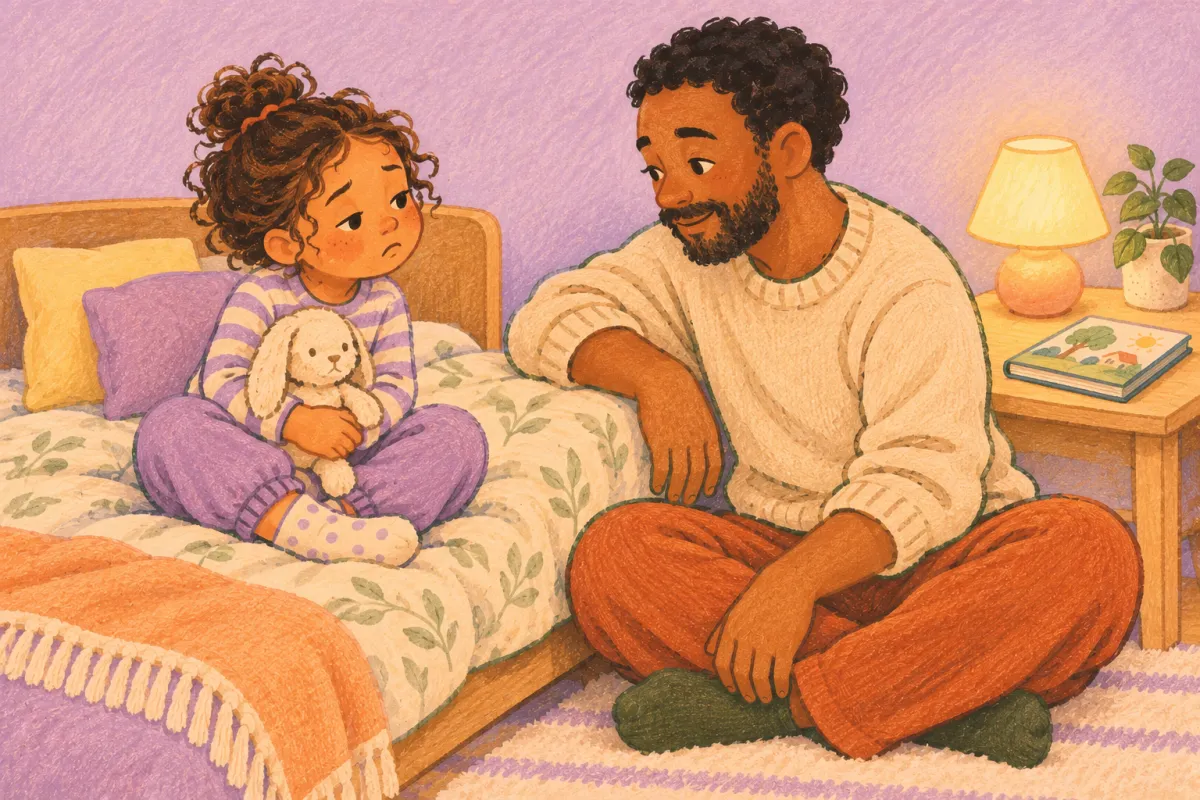
Before the final goodnight, make room for ordinary needs and choose the small ending your household plans to use. Respond to new comfort or safety needs as they arise; a routine is a reference, not a reason to ignore them.
Name the moment you want to plan
“Bedtime is hard” can include very different moments. Write down whether the difficulty is starting, moving between steps or repeated requests at the end. You only need to choose the part you want to make clearer next time.
Keep your description neutral: “We had not decided whether the second book was part of the routine.” A practical description gives the next adult something to work with and avoids turning a child’s request into a label about their character.
Prepare before the final step
Review ordinary needs such as the bathroom, a drink or the item your child usually has at bedtime. Decide on the familiar ending you can explain. This is preparation for your own routine, not a rule that predicts every need in advance.
Try one brief sentence in a calm moment. “This is our last book, then we say goodnight” is an example. If those words do not fit your household’s care, change them. The purpose is to make the plan understandable to the adults and child involved.
Record what you actually tried
A check-in can say that bedtime happened, that you tried the ending and that it felt only a little helpful. All three facts are useful. Avoid compressing them into “worked” or “did not work.”
On another evening, repeat the manageable part or make one small change. If there are persistent sleep concerns or unusual distress, seek individual professional guidance. CalmerTurn cannot tell whether a repeated request reflects a routine issue, discomfort or something else.
Sources and limits
For broader pediatric guidance, read American Academy of Pediatrics: Toddler Bedtime Trouble. The household examples and planning exercises on this page are our editorial suggestions; they have not been independently clinician-reviewed or tested as treatment.
CalmerTurn is an early educational product. We do not claim clinical outcomes, expert endorsement or results from families who have not used it. For persistent concerns, unusual distress, sleep or developmental worries, talk with your child’s clinician. How we write and measure →
Keep the next step connected.

A short bedtime routine for ages 2–5
Make a familiar evening sequence that caregivers can prepare, use and revisit after an actual bedtime opportunity.
Read the guide ↗
A bedtime handoff another caregiver can use
Share the order, familiar materials and last useful observation with the adult helping at bedtime.
Read the guide ↗