
screen-off / A practical guide
TV and iPad transitions need different plans
Compare a shared-screen stopping point with a handheld-device handover before creating a household routine.
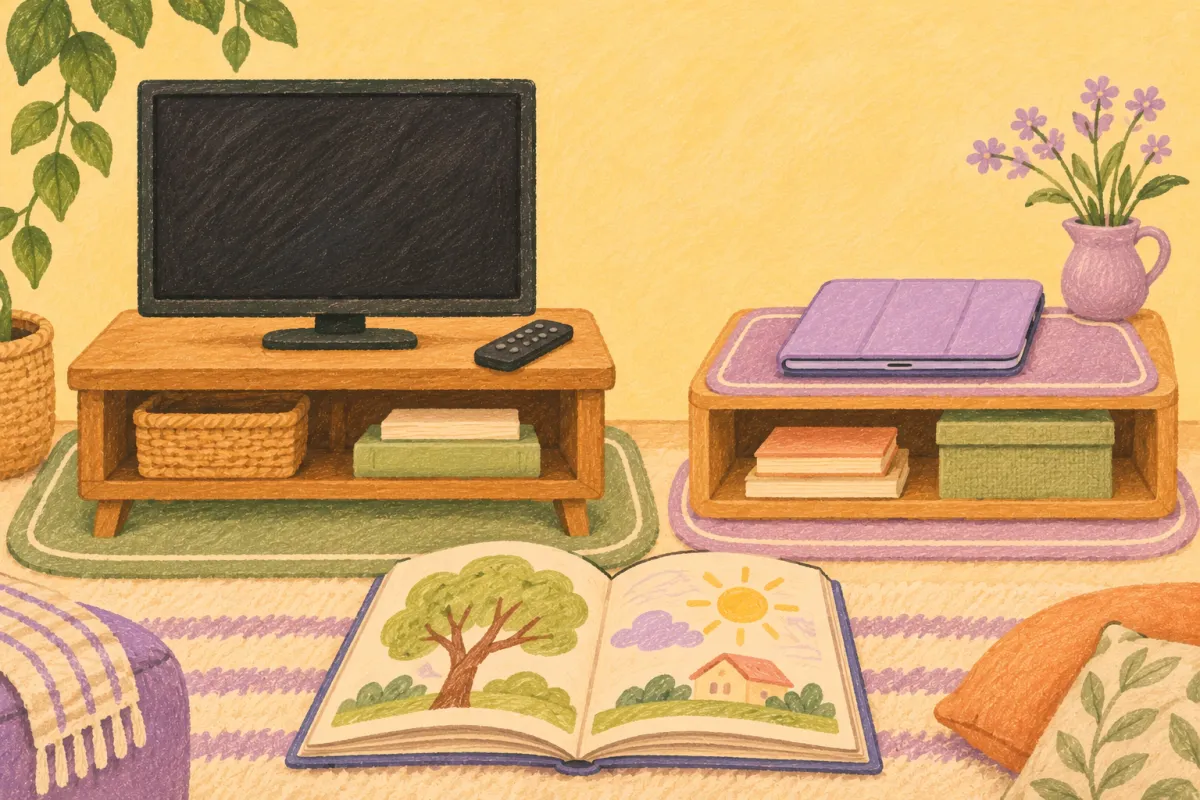
A place to start
A TV plan should account for everyone watching. An iPad or iPhone plan also needs a clear handover and resting place. Mixed-screen households can keep the same before/during/after structure and change those practical details.
Map the shared screen
With a TV, list who is still watching when one child needs to move on. An episode ending for one person may not be the end for an older sibling. Write a plan that is realistic for that shared space rather than borrowing an individual-device rule.
You might choose a shared stopping point, or arrange for the next activity in another place with an available adult. The right choice depends on your household. The planning task is to make the adult responsibilities visible.
Map the handheld handover
For an iPad or iPhone, decide where the device rests afterward and who will help with the transition. “Put it away” can hide several steps: leave the activity, close the cover, walk to the shelf and move on. Choose one clear next action.
Avoid making the plan depend on a feature you have not set up. CalmerTurn provides a shared routine plan; it does not lock devices or control a TV. If you already use device settings, treat those as a separate part of your household setup.
Keep the observation comparable
Record TV, iPad/iPhone or mixed as context. If you use the plan again, note which practical detail changed. You do not need to conclude that one kind of screen caused the difficulty from a handful of evenings.
Return to the same routine on another day before opening a second one just to explore. A useful observation is “we used this plan on three different evenings.” Opening several plans tells you much less about which one will help in real life.
Sources and limits
For broader pediatric guidance, read American Academy of Pediatrics: Screen Time & Temper Tantrums. The household examples and planning exercises on this page are our editorial suggestions; they have not been independently clinician-reviewed or tested as treatment.
CalmerTurn is an early educational product. We do not claim clinical outcomes, expert endorsement or results from families who have not used it. For persistent concerns, unusual distress, sleep or developmental worries, talk with your child’s clinician. How we write and measure →
Keep the next step connected.

A small plan for ending screen time
Plan a stopping point, prepare what comes next and share a short screen-off script with another caregiver.
Read the guide ↗
When a screen-time timer is not helping
Use a short reflection to decide whether the stopping point, next activity or adult handoff needs to change.
Read the guide ↗