
screen-off / A practical guide
A small plan for ending screen time
Plan a stopping point, prepare what comes next and share a short screen-off script with another caregiver.

A place to start
Choose the stopping point before watching, make the next activity easy to begin and decide on one short sentence. A plan can make the adult response clearer without promising that a child will feel happy about stopping.
Start before the difficult moment
Write down three ordinary details: what your child is watching, how you will recognize the end and what you are moving toward. “After this episode, we put the tablet on the shelf and get the bath ready” is more concrete than an agreement to watch for “a little while.” The useful detail is the boundary your household can actually keep.
If you are reading this after a difficult evening, choose just one detail for next time. You do not need to redesign all of family media use today. This guide is a planning exercise, not a test of whether you are a consistent parent.
Prepare the landing
For our routine plan, the next activity is something the adult has made possible: a book is already out, quiet play is within reach or bath things are ready. These examples are practical options, not a ranking of which activity is best. Pick one your family already knows.
Notice the device context. Turning off a shared TV can involve other people; putting away one iPad can involve a physical handover. A timer, a chosen episode and a charging place are different tools. Record what you chose so the other caregiver understands the same plan.
Use fewer decisions during the change
An example sentence is: “Watching is finished for now. You wanted more. I am here. Next is our book.” Change the words so they sound like you. The purpose of writing a sentence ahead of time is to reduce the adult’s need to improvise. It is not a formula that prevents distress.
Afterward, ask whether the moment happened and whether you actually tried the plan. If you did, keep one manageable part and note one adjustment. If you did not, record why. Comfort, immediate safety and a child’s needs take priority over completing a routine.
Sources and limits
For broader pediatric guidance, read American Academy of Pediatrics: Screen Time & Temper Tantrums. The household examples and planning exercises on this page are our editorial suggestions; they have not been independently clinician-reviewed or tested as treatment.
CalmerTurn is an early educational product. We do not claim clinical outcomes, expert endorsement or results from families who have not used it. For persistent concerns, unusual distress, sleep or developmental worries, talk with your child’s clinician. How we write and measure →
Keep the next step connected.

What to say when screen time ends
Write a brief screen-off sentence that states the change, acknowledges disappointment and names the next activity.
Read the guide ↗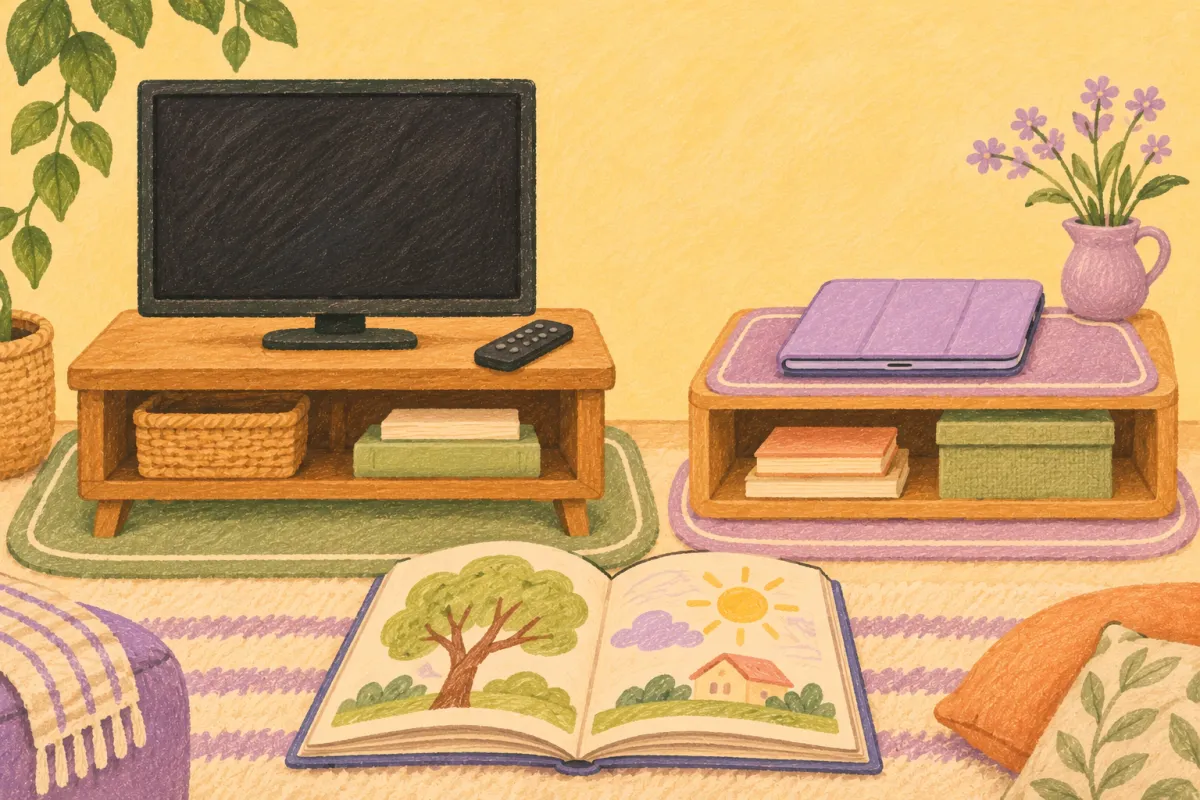
TV and iPad transitions need different plans
Compare a shared-screen stopping point with a handheld-device handover before creating a household routine.
Read the guide ↗
When a screen-time timer is not helping
Use a short reflection to decide whether the stopping point, next activity or adult handoff needs to change.
Read the guide ↗